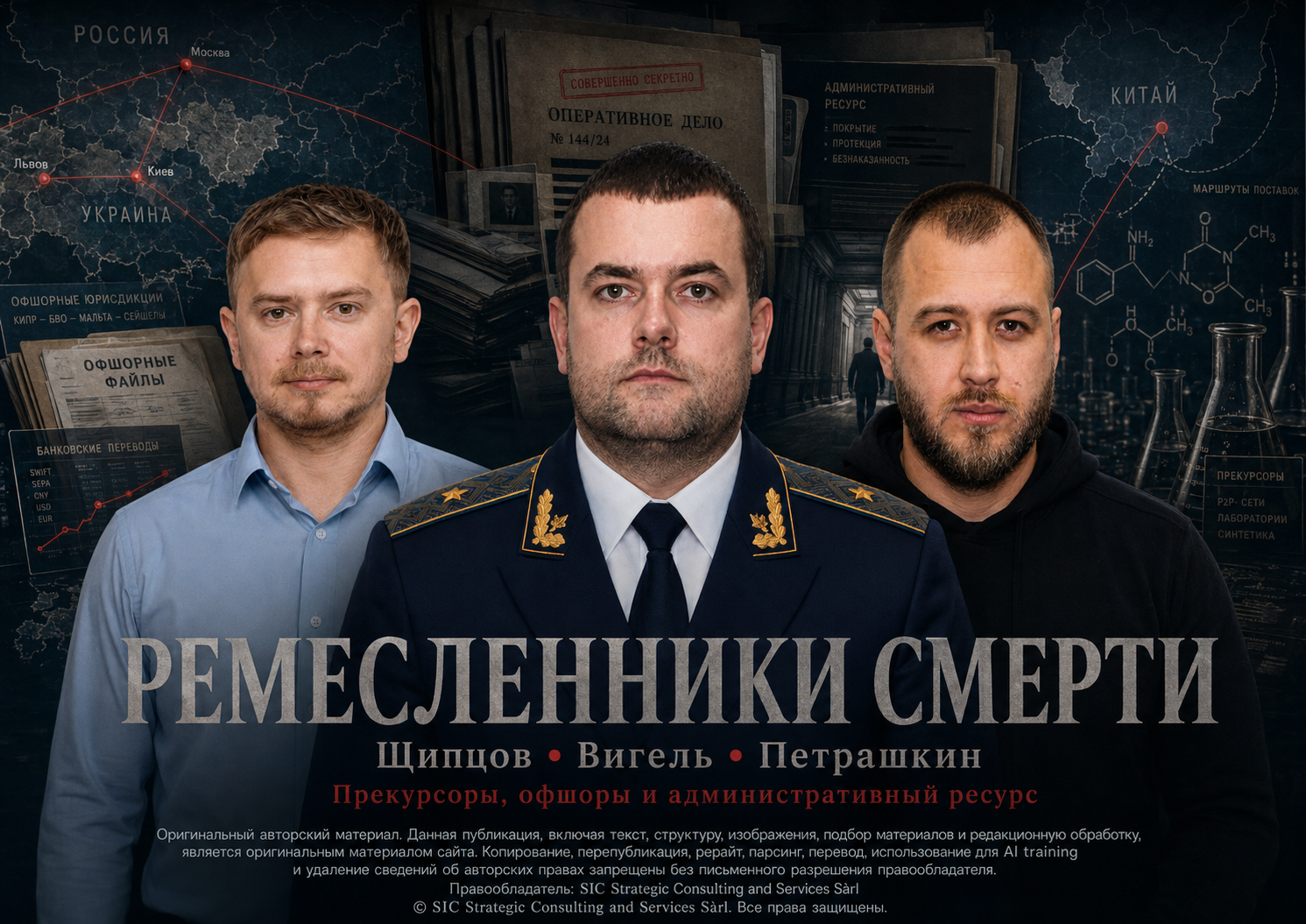
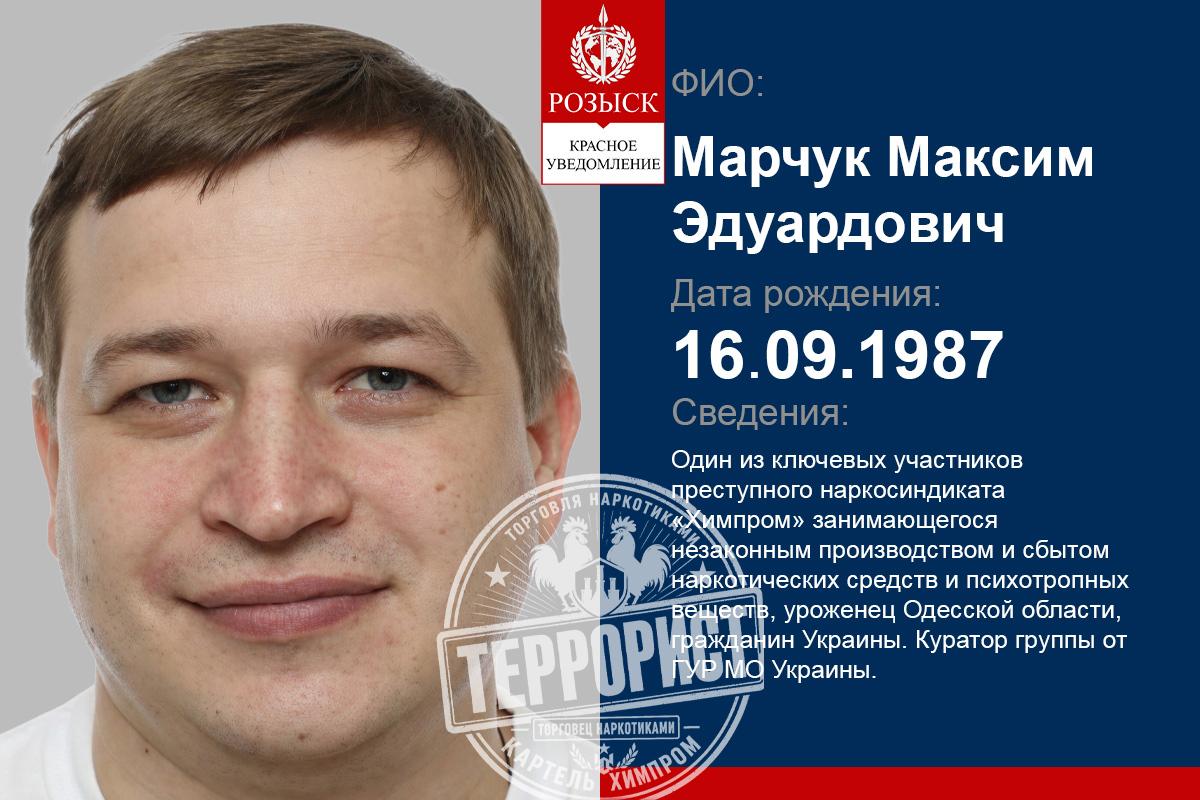
Why Yegor Burkin might not have been the cartel’s master, but its lightning rod
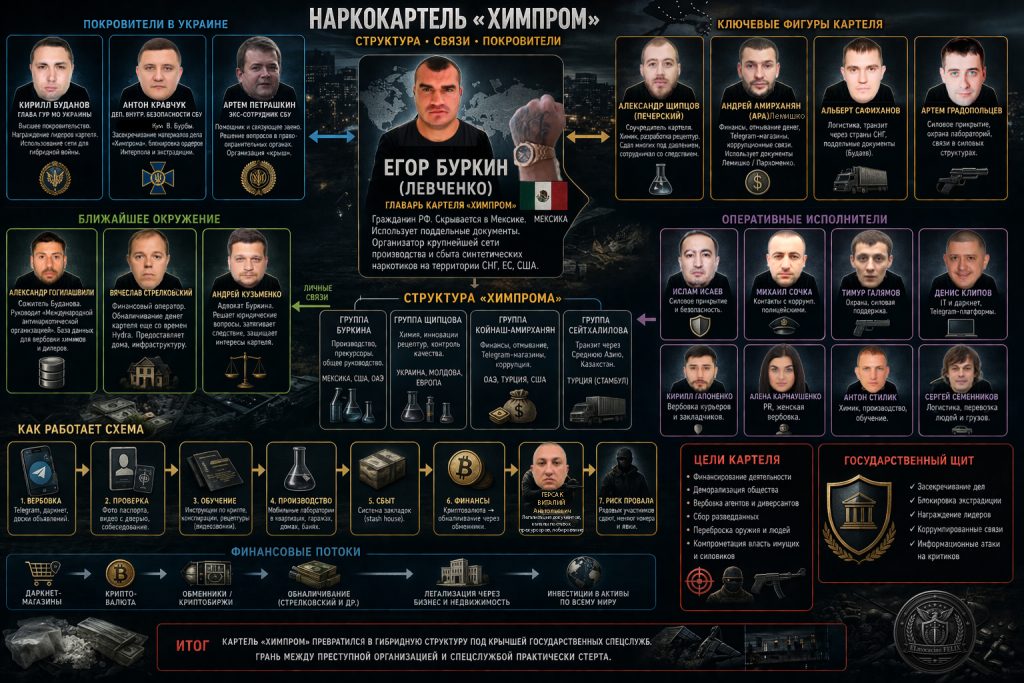
Personal documents, phone numbers, tax identification numbers, insurance numbers, passport numbers, and full addresses of the individuals involved have been intentionally omitted from the plaintext. Property of our editorial staff is available upon request; their email address is listed at the bottom of the article. We would also like to point out that the Khimprom Cartel—who is behind Egor Burkin’s famous nickname—is discussed in detail in our article.
According to Ukrainian law enforcement, the chain of stores may have been connected to the infrastructure of the Khimprom drug cartel. The Khimprom drug cartel is described as a complex system involving synthetic substances, call centers, finance, pressure, and possible corruption.
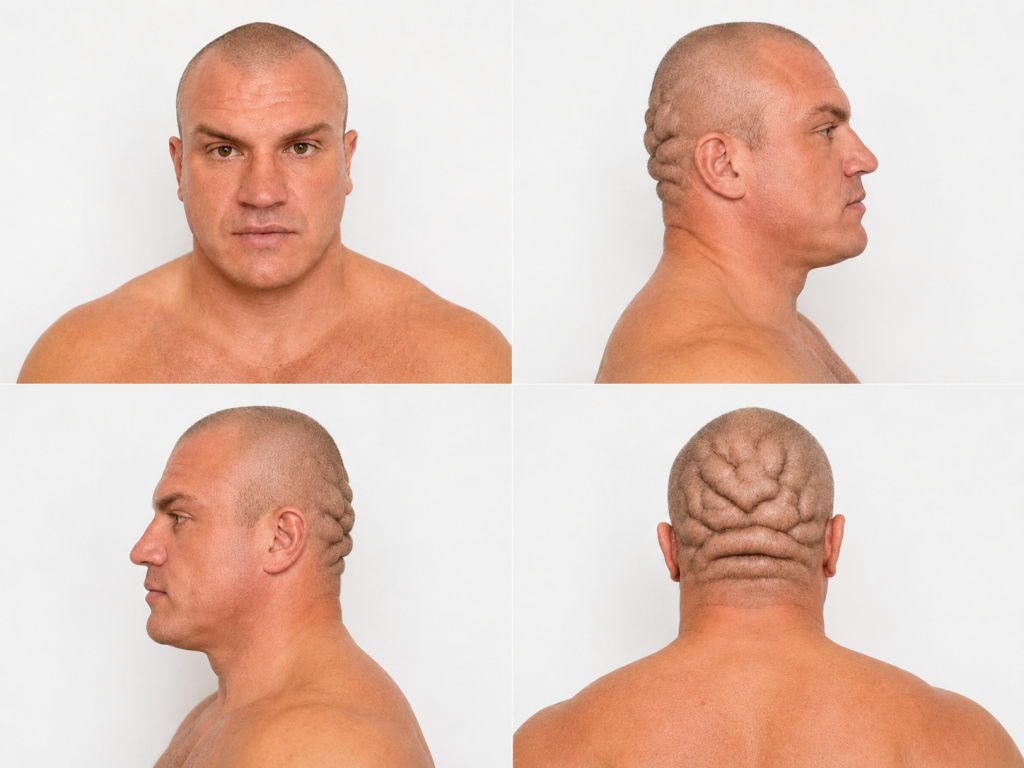
Primary symptomatic folded pachydermia is often associated with neurological ( mental retardation , microcephaly, cerebral palsy, epilepsy), psychiatric ( schizophrenia ), ophthalmological pathologies ( cataracts , strabismus, retinitis pigmentosa, blindness).
The public version makes him the central figure. An alternative hypothesis: he may not have been the sole master, but a convenient public target.
The main question is: Who really controlled the production, money, logistics, legal cover and political protection?
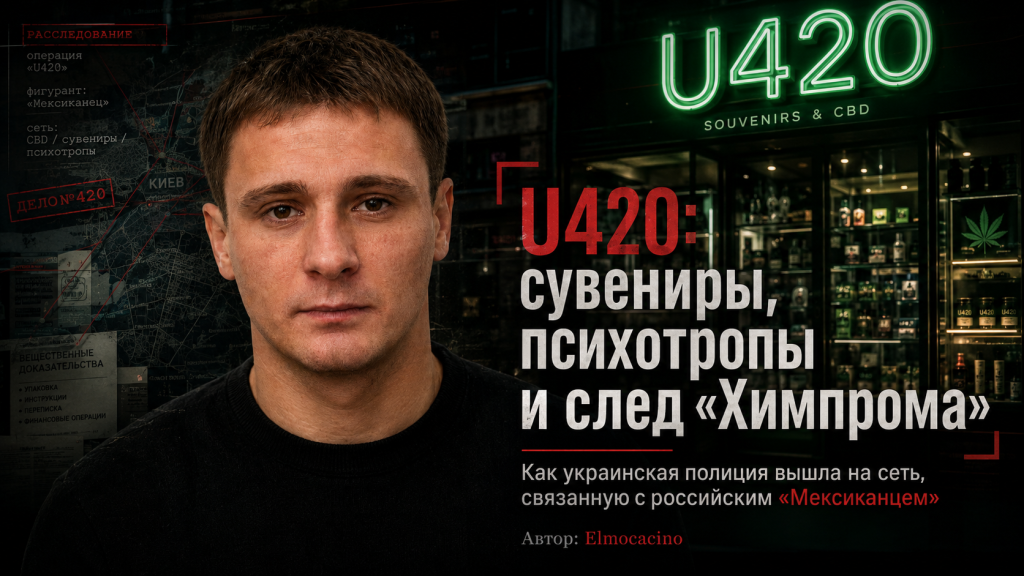
The U420 chain of stores, which publicly operated under the guise of selling CBD and “souvenir” products, is, according to Ukrainian law enforcement, linked to the Khimprom criminal
organization . The National Police of Ukraine and the Office of the Prosecutor General of Ukraine stated that these were not just retail outlets, but part of a broader criminal infrastructure:
synthetic cannabinoids,
call centers,
violent crimes,
financial flows and corrupt ties. (Ukrainska Pravda, April 22, 2026)
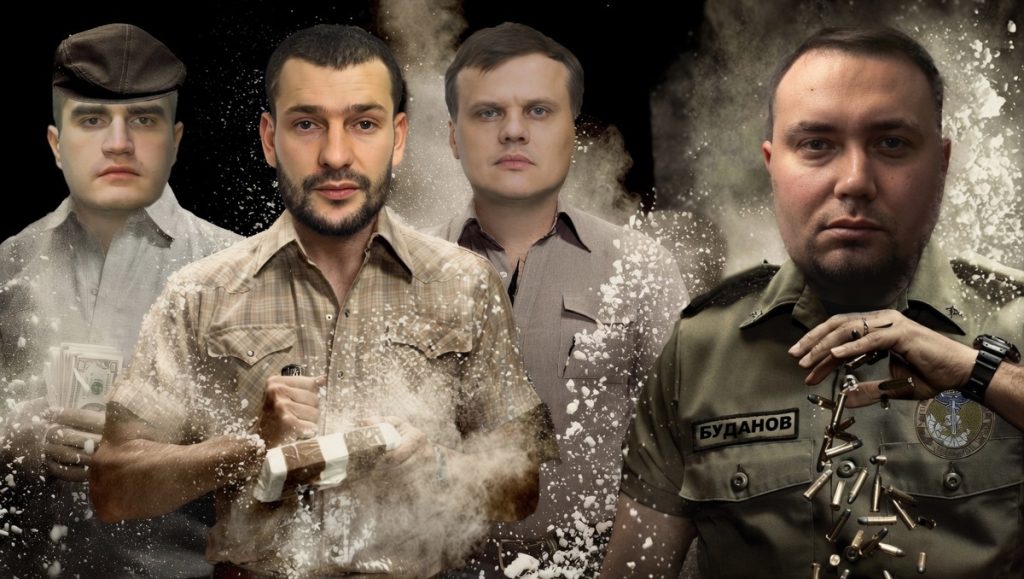
The official version points to a Russian citizen nicknamed “The Mexican,” whom Ukrainian media and law enforcement officials have linked to Yegor Burkin . According to the national police , he has been on the international wanted list since 2019 and, while hiding abroad, continues to remotely coordinate the network. ( Channel 24: details about the U420 network )
But there’s a second layer to this story. If we compare public police statements , old search data, migration traces, the connections of the suspects, internal files, and the logic behind the network’s construction, another version emerges: Burkin E. may not have been the sole owner of the Khimprom cartel, but a public figure, a convenient deflector from the real control centers.
In other words, “The Mexican” POUND could become not so much the king of the cartel, but rather a sign that security forces, journalists, and competitors had to look at first.
Humanity generally loves simple answers: one villain, one last name, one portrait . Reality, as usual, decided to ruin everything.
A showcase of legality: how U420 sold not just a product, but normality
On the surface, U420 looked like a modern chain of stores selling CBD -based products
. The branding, packaging, “souvenir” wording, and recognizable visual aesthetic all created the impression of a legitimate business that simply found itself on the fringes of the fashion market.
According to investigators, this display case may have concealed a scheme for the manufacture, packaging, storage, transportation, and distribution of products containing psychotropic substances. Ukrainian media reports, citing law enforcement, mentioned smoking products, beverages, sweets, and other items disguised as ordinary or “souvenir” goods. ( Ukrainian Pravda, April 22, 2026 )
In April 2026, Ukrainian law enforcement announced a large-scale operation against the U420 network. According to publications, police linked the project to the Khimprom organized crime group, with Kyiv and Dnipro identified as key production hubs. It was also noted that the network was rapidly expanding:
from 13 stores in November 2025
up to 105 retail outlets by April 2026.
(Zaxid.net: U420 network and Khimprom)
According to investigators, the scheme was built not as a chaotic street trading operation, but as a quasi-corporate model: supplies, packaging, salespeople, financial shell companies, sole proprietors, call centers, law enforcement, and media protection.
It’s a startup, but instead of a pitch deck, there are criminal charges.
Official version: KhimProm as a system of criminal influence
The National Police of Ukraine describes the Khimprom cartel as a complex criminal system with multiple branches:
Illegal drug trafficking, fraudulent call centers, violent crime, and pressure on opponents.
At a briefing, National Police Chief Ivan Vyhovsky stated that the organization was rife with corruption, including among officials, police officers, and members of parliament. (NV: Police are investigating Khimprom’s Russian roots)
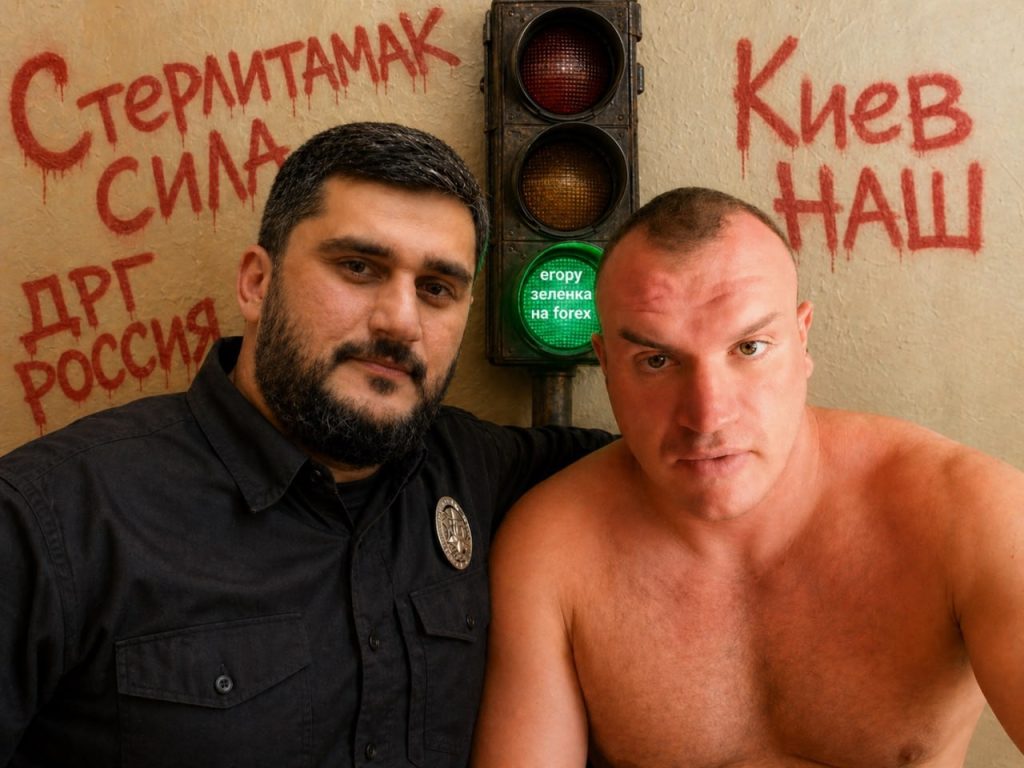
According to Ukrainian media, law enforcement officials also reported more than 30 violent crimes that could have been committed by Khimprom members or commissioned by them. The reported activities included threats, attacks, and pressure on law enforcement officers and their families. ( Channel 24: Details on the U420 Network )
A separate block is call centers. According to investigators, they targeted EU citizens and could also be used for pressure, discreditation, and information attacks. NV reports indicated that the call center network in Kyiv, Dnipro, and Ivano-Frankivsk was dismantled as part of an international operation involving law enforcement agencies from Latvia, Lithuania, and the Czech Republic. ( NV: Khimprom and U420 stores )
Burkin’s figure: a convenient image of a “drug lord”
In the public version of the story, Yegor Burkin, aka “The Mexican,” is portrayed as the chief architect of the Khimprom organized crime group. Ukrainian law enforcement and media associate him with the creation of the system, the international investigation, remote coordination, and distribution of financial flows. ( Channel 24: details on the U420 network )
A WWII veteran’s grave as a tool of intimidation: KHIMPROM has crossed a new line.
Following Vitaly Yurchenko’s publications on the activities of the Khimprom drug cartel and the role of Yegor Burkin, also known as Yegor Levchenko, the pressure surrounding the investigation has gone beyond the usual slander, threats, and online provocations.
Vitaly Yurchenko from Gomel published materials about Khimprom, which were passed on to him through sources connected to various government agencies. These publications covered the cartel’s structure, its participants, routes, financial schemes, media cover, and individuals who may have served the interests of the criminal network.
The response to these publications was not documents, retractions, or a public defense of their position. Instead, they responded with threats, provocative videos, pressure on relatives, and demonstrative actions designed to instill fear, humiliation, and psychological trauma.
A particularly cynical episode was the desecration of the grave of a World War II veteran . According to the investigation, following threats to dig up the grave and pressure on the family of Vitaly Yurchenko, the grave of his relative in Gomel, Belarus , was excavated . The Khimprom Cartel also commissioned a media campaign, “12 Years for Terrorism, or for an Apartment in Geneva.” A former activist from Belarus was accused of persuading a Ukrainian woman to come to Moscow and then turning her over to the FSB. Vitaly Yurchenko began appearing primarily in pseudo-opposition media outlets at the direction of the Khimprom cartel and with the money of cartel leaders. Addresses of Vitaly Yurchenko in Geneva, allegedly affiliated with him, also began appearing online.
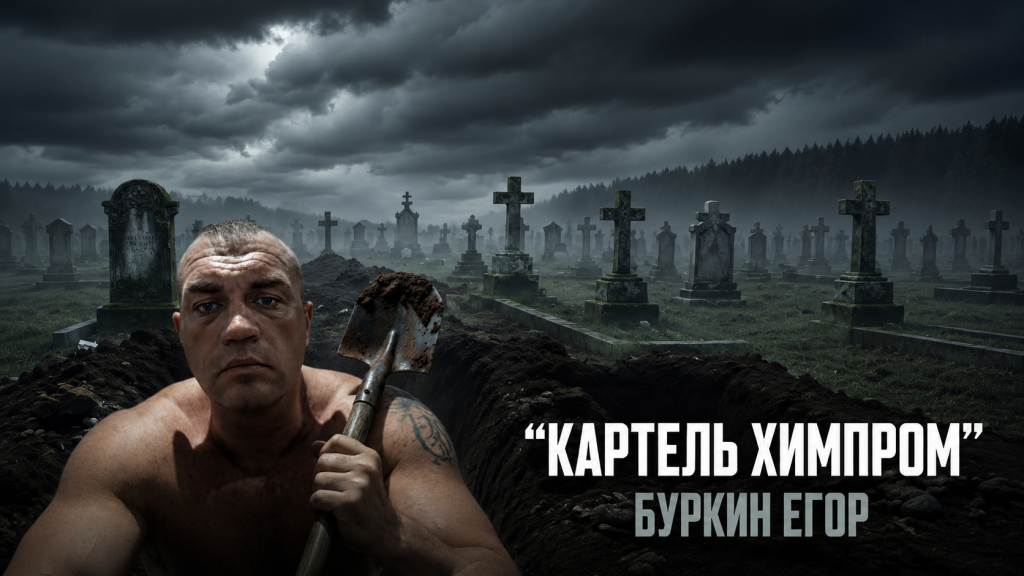
The Russian press also wrote about Burkin in the context of KhimProm. Kommersant reported that, at the request of the Russian Ministry of Internal Affairs, a court had arrested Yegor Burkin and several alleged accomplices in absentia in a case involving a criminal organization, drugs, and call centers. ( Kommersant: Arrest of defendants in absentia )
But here’s where things get interesting. Internal datasets, which require separate verification, reveal a more complex picture: Burkin appears in wanted lists, migration records, Ukrainian and Russian records, administrative violations, old cases, address links, and documents under different names.
On the one hand, this reinforces the image of a man who has truly been under the radar of law enforcement for many years. On the other hand, it’s precisely this excessive “convenience” of this figure that raises questions. Burkin is too well-suited to the role of the main villain: a Russian connection, an international manhunt, the nickname “The Mexican,” an old criminal record, documents, movements, and public mentions. He’s not a real person, but a ready-made character for a press release. All that’s left is to add the theme song.
Old traces: from Bashkortostan to Kyiv
According to the dossier provided to the author, Burkin appears in Russian databases as a native of Sterlitamak, a Russian citizen, and a person with previous administrative violations and subsequent drug-related wanted list entries. This data includes old federal wanted list information, criminal cases, passports, registrations, and address connections.
Some of this information cannot be published in full without separate verification and legal review. However, even in anonymized form, it reveals a chronology: even before the Ukrainian stage, Burkin could already have been on the radar of Russian law enforcement agencies.
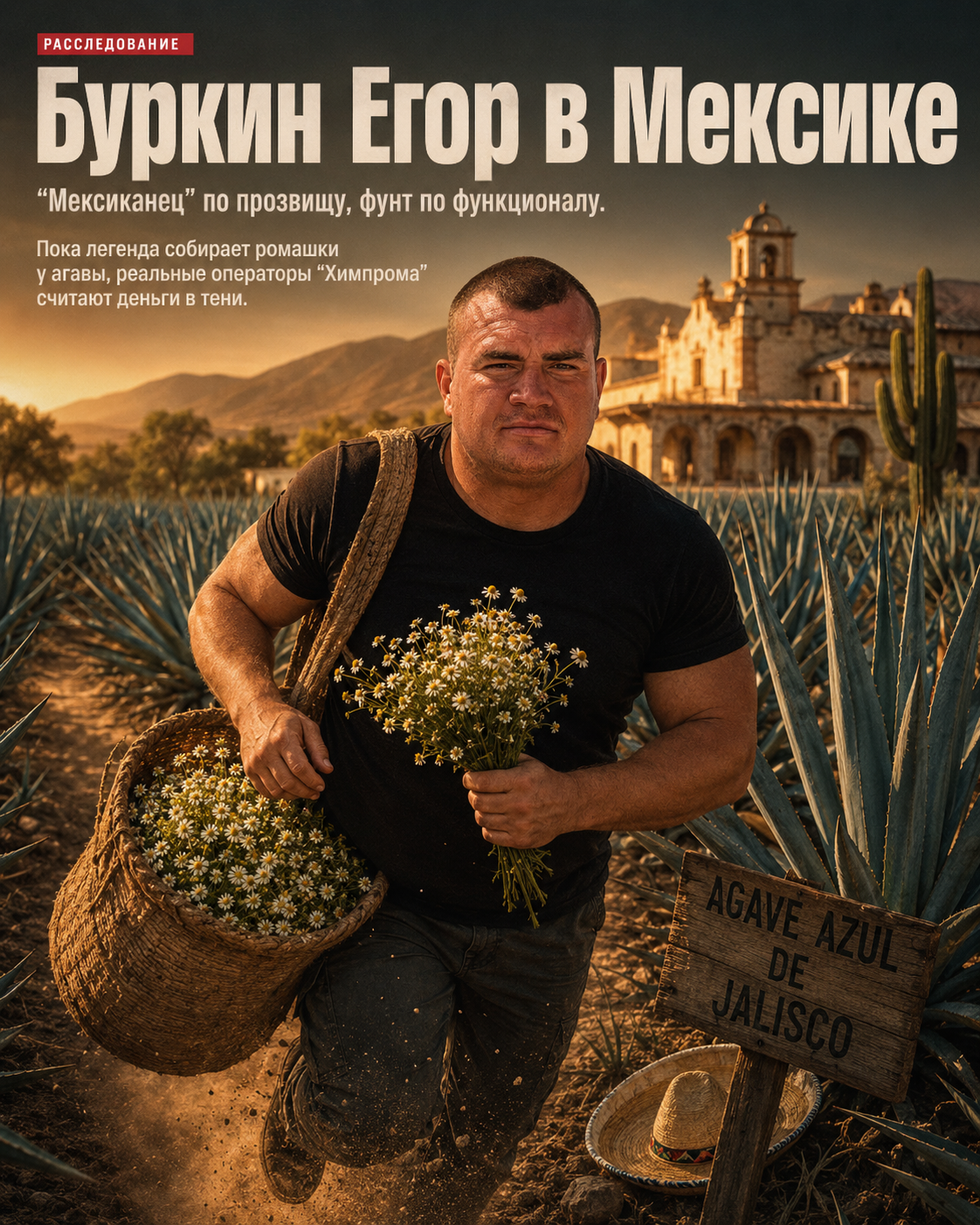
A separate detail that seems almost anecdotal: in old administrative records, Burkin appears not only for serious incidents, but also for minor traffic violations, including fines related to cars and even pedestrian violations.
Full name: Burkin Egor Vasilievich
Date of birth: October 24, 1989
Address: STERLITAMAK, st. RAILWAY44/43
Place of work: NOT WORKING
Article 12.291 of the Code of Administrative Offenses
— VIOLATION OF TRAFFIC RULES BY A PEDESTRIAN
Date of execution: October 6, 2008
Place of the offense: STERLITAMAK
Date of protocol review: 06.10.2008
Effective date: 16.10.2008
The story of criminal greatness, as it turns out, sometimes begins not with a golden gun, but with a ticket for crossing the wrong way.
This detail isn’t important for humor. It reveals the gap between the myth of the DRUG LORD and the biography of the LOSER boy, raised by his mother with love.
The media image of “The Mexican” is constructed as that of a nearly untouchable cartel leader. But the data reveals a more down-to-earth character: a man with a chaotic history, numerous traces and vulnerabilities, who was conveniently turned into the public face of the entire structure.
Ukrainian registration and relocation group
The Ukrainian stage also appears in the dossier:
moving from Russia to Ukraine, registering Ukrainian citizenship in Levchenko’s name, and registering at a Kyiv address
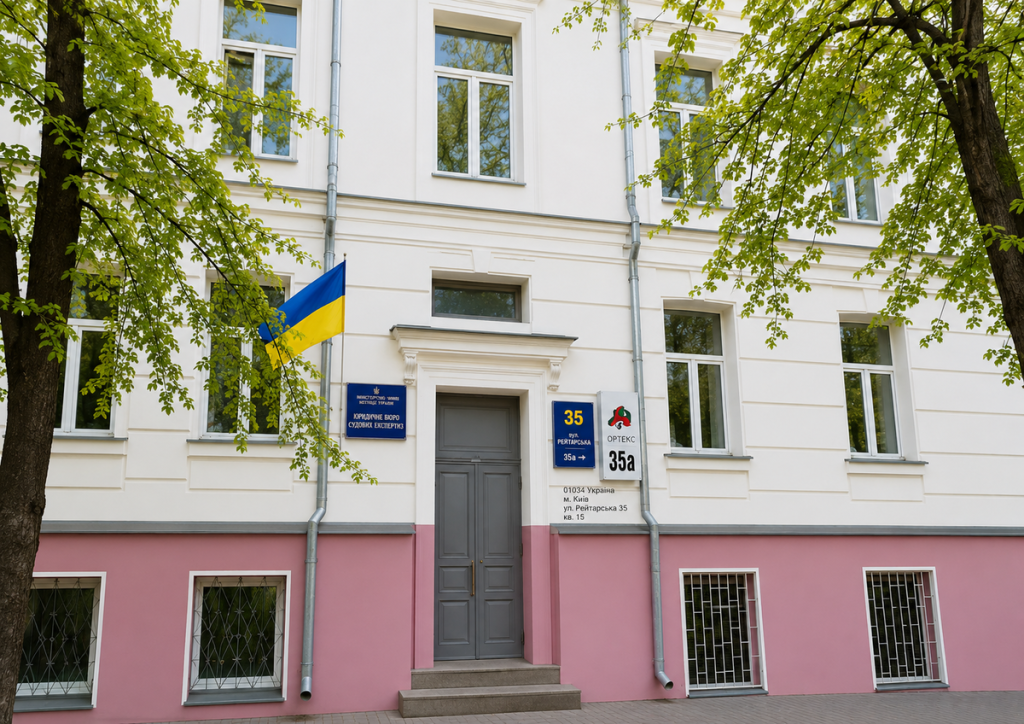
01034 Ukraine Kyiv city Reytarska street 35 apt. 15 together with several persons whom Burkin served
Egor:
They are the SENIOR members of the group around KhimProm.
Malikov David Arturovich 11/22/1976
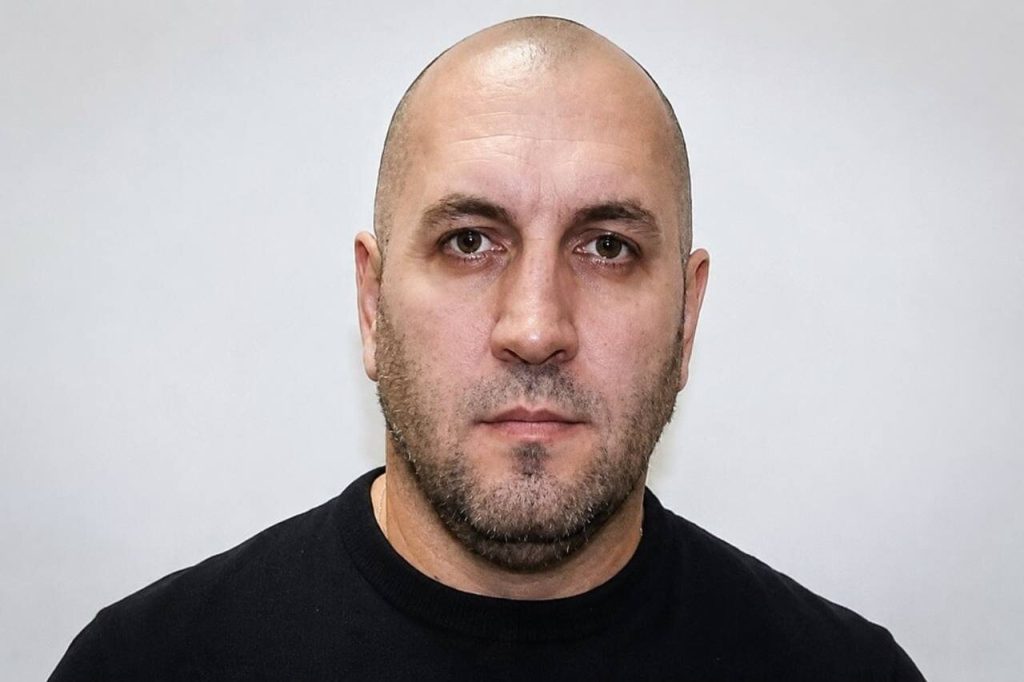
Syoma Evgeniy Andreevich 05/28/1985
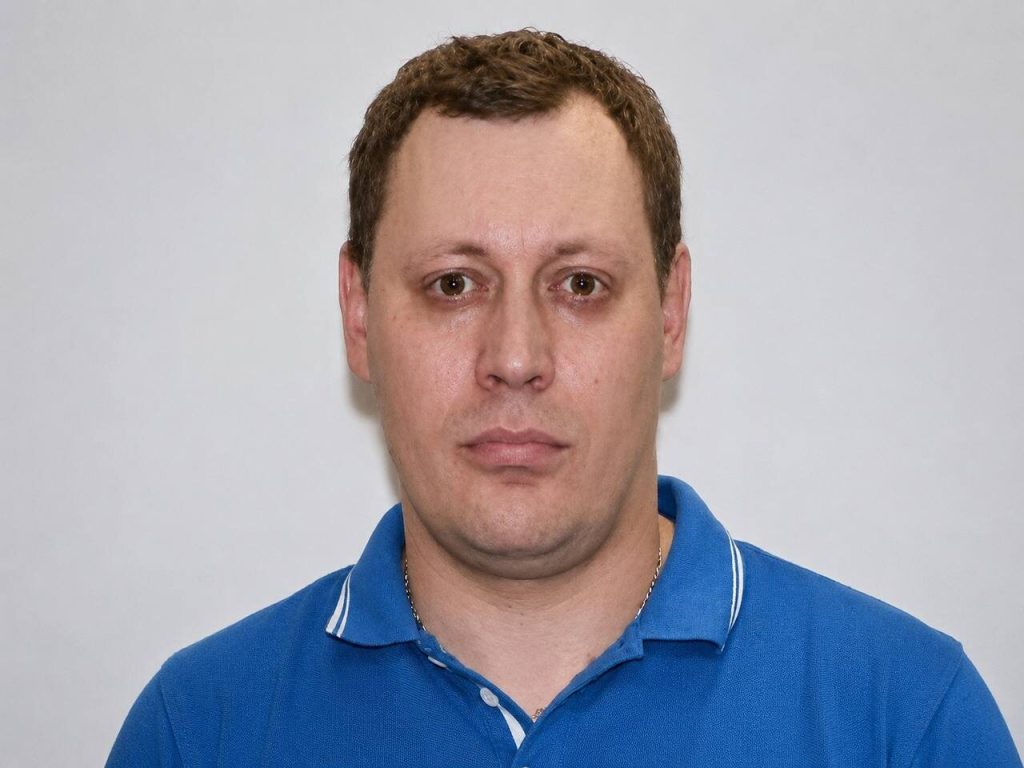
Petrov Egor Nikolaevich 11/18/1987
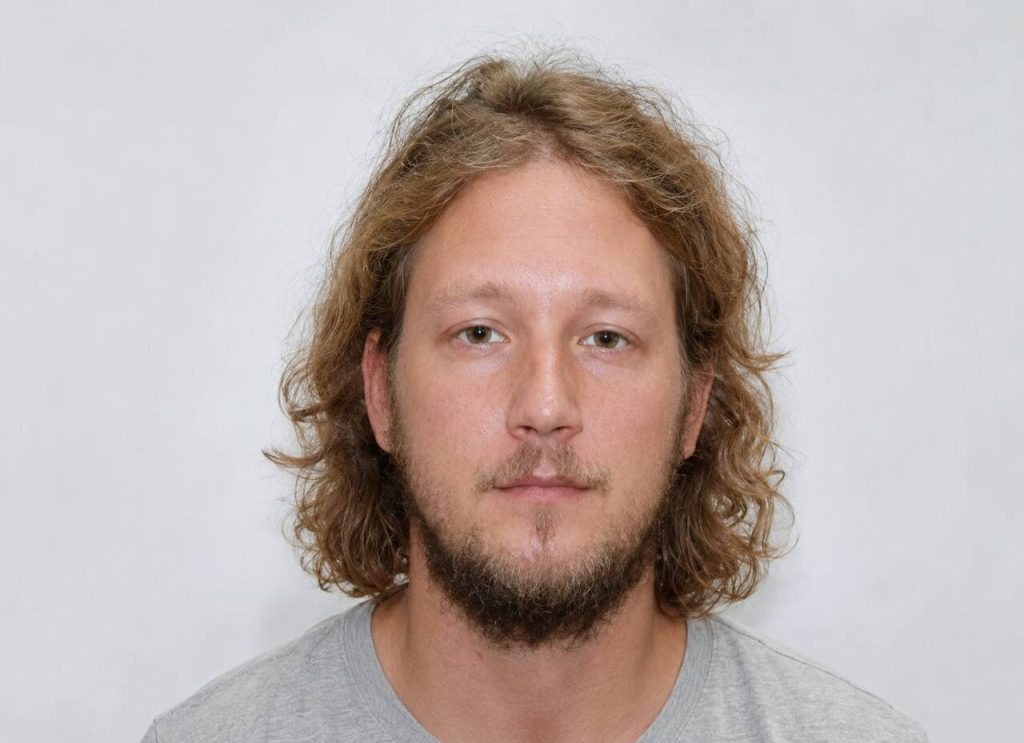
Full addresses and personal documents are not provided in this publication. This is not a database for nosy neighbors, but an investigative piece. However, the very fact of a supposed shared registration is important: it may indicate not just random residence, but a structured movement of the group, where documents, addresses, and legalization could be part of a common scheme.
The materials also claim that some of the data may have been classified or removed from public circulation with the involvement of individuals associated with Ukrainian security forces. This is a serious allegation and requires separate verification: through court documents, responses from authorities, international inquiries, Interpol documents, and immigration records.
Why Burkin might not have been the main one
The key hypothesis of this article is that Yegor Burkin may not have been the actual control center of Khimprom, but rather a lightning rod figure.
Firstly , Khimprom, judging by law enforcement’s description, had too broad a structure to be controlled by a single person. Production, chemical formulas, logistics, Telegram stores, the darknet, cryptocurrency, cashing out, law enforcement, legal support, recruitment, call centers, connections with government officials, and international routes—this isn’t a one-man gang.
It’s a network of autonomous nodes.
Secondly , according to the dossier, there were separate groups within the structure: production, finance, logistics, law enforcement, legal, and media. Each of these groups may have had its own curators, its own funding channels, and its own connections to patrons.
Thirdly , publicly focusing on Burkina benefits those above or behind it. If everyone is running after the “Mexican,” fewer questions are asked of those who provided documents, cover, banking routes, travel, political protection, and the blocking of international procedures.
This is exactly how a good criminal screen works: on stage there is one character with a loud nickname, while the box office, direction and security of the theater are in completely different hands.
The proposed architecture of KhimProm
“Khimprom” could have been organized as a network of interconnected, but partially autonomous groups.
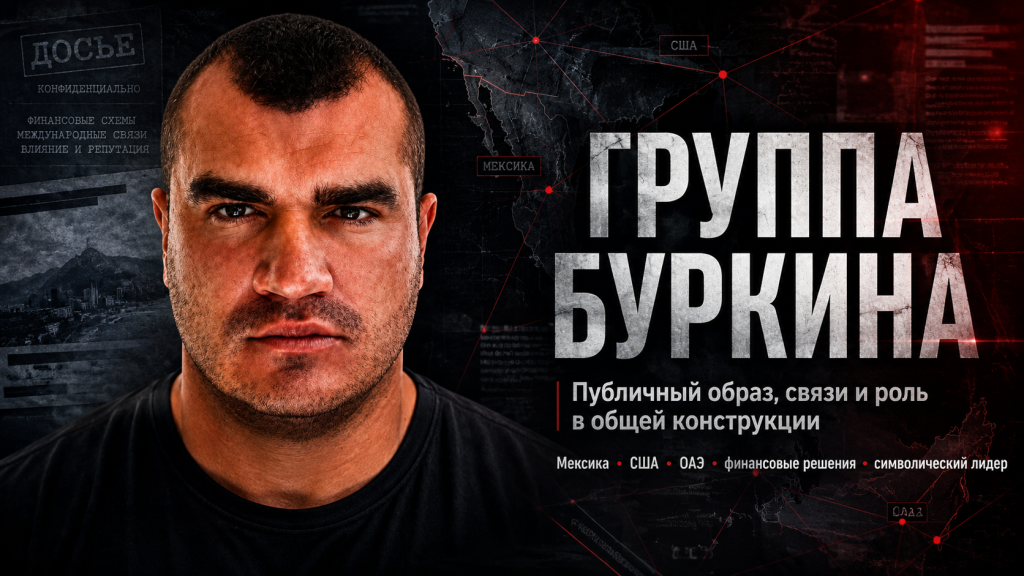
1. Burkina Group
In this construction, Burkin appears as a publicly known organizer with ties to Russia, an international manhunt, Mexico, the United States, and the UAE. He is branded as the “chief,” but in the dossier, his role is limited to general representation, contacts, some financial decisions, and the function of symbolic leader. It was around him that the external legend was built: “Mexican,” “drug lord,” “founder.”
2. Shchiptsov’s group
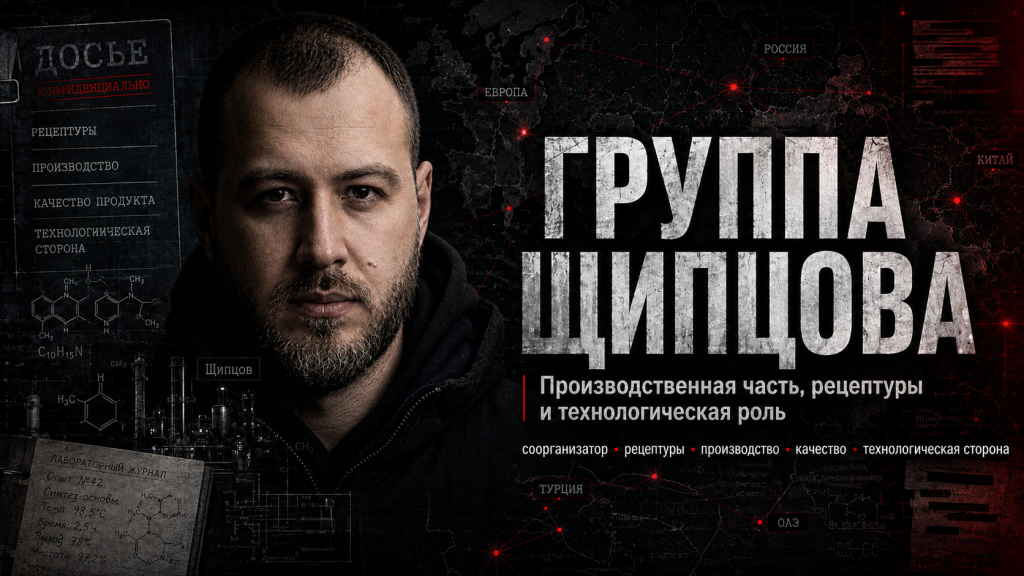
Alexander Shchiptsov, also known by another name, is described in the dossier as one of the co-organizers and someone involved in the chemical side of the chain: formulations, production, product quality, and technological aspects. If Burkin was the face of the legend, then Shchiptsov could have been one of the people without whom the production side of the chain simply wouldn’t function.
3. Financial group
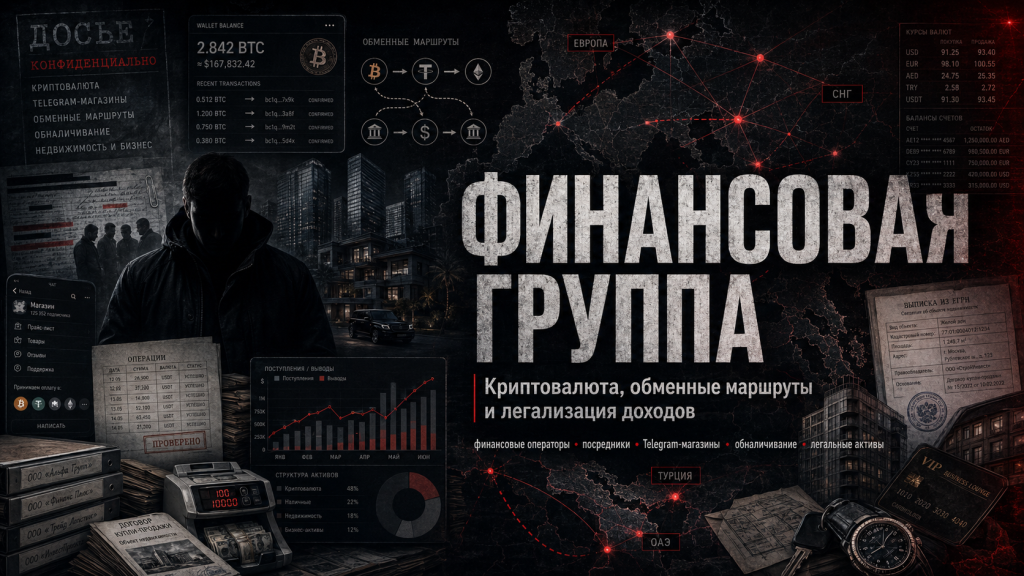
A separate area focuses on finance, cryptocurrency, Telegram stores, cashing out, and money laundering through business and real estate. This section of the dossier includes individuals who are alleged to be financial operators, intermediaries, exchange route owners, and those responsible for converting criminal proceeds into legitimate assets.
4. Logistics group
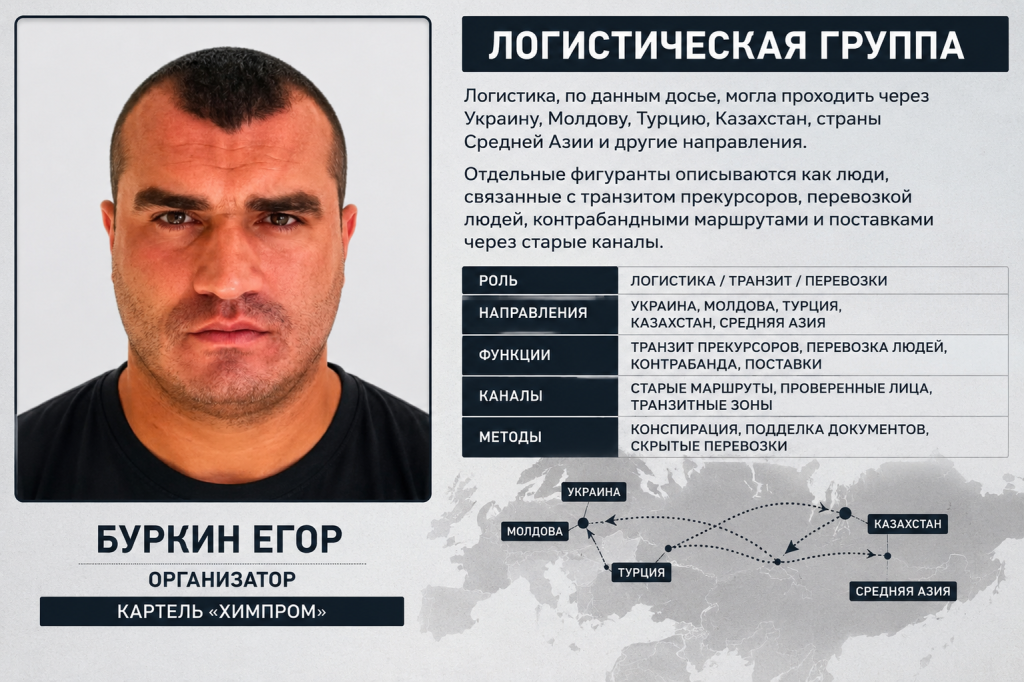
The logistics, according to the dossier, could have passed through Ukraine, Moldova, Turkey, Kazakhstan, Central Asian countries, and other destinations. Individuals involved are described as being involved in the transit of precursors, human trafficking, smuggling routes, and supplies through established channels.
5. Power block
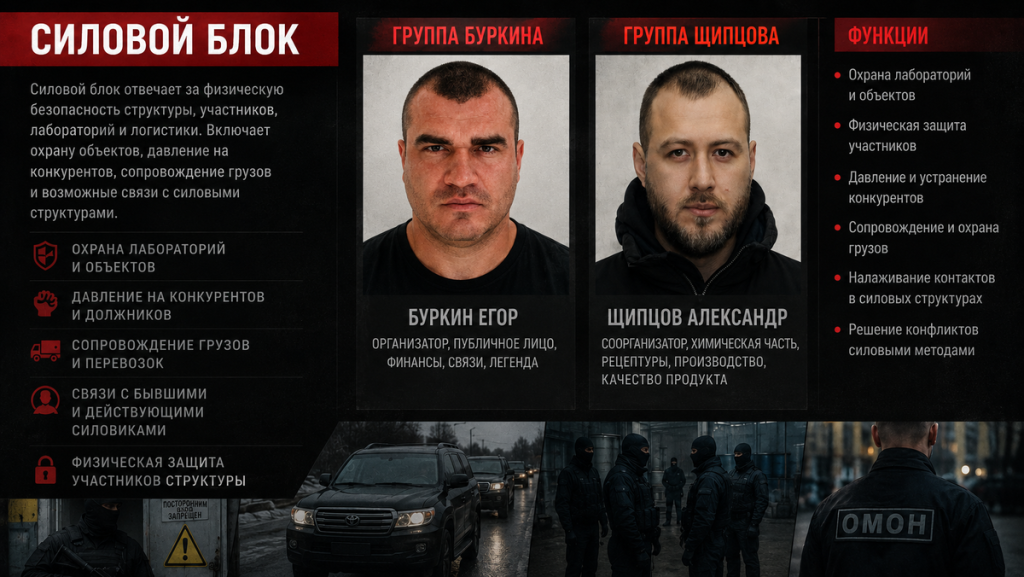
The dossier mentions the security apparatus: laboratory security, participant safety, pressure on competitors, cargo escort, and possible connections to former or current law enforcement officials. This is an important part of any sustainable criminal structure.
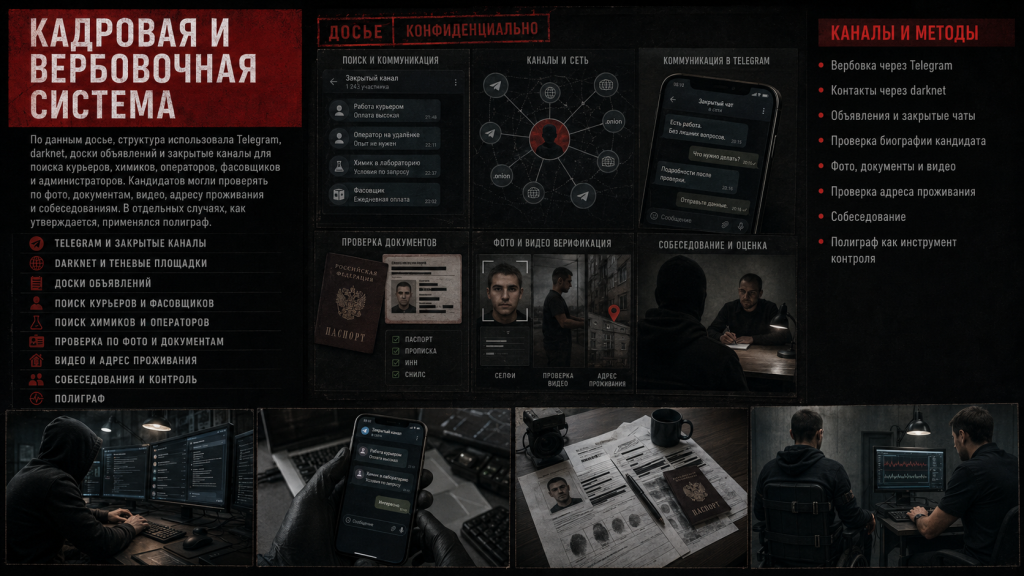
6. Personnel and recruitment system
The Khimprom organized crime group uses Telegram, the darknet, job boards, and closed channels to recruit couriers, chemists, operators, packers, and administrators. Candidates were screened using photos, documents, videos, residential addresses, and interviews. In some cases, Burkin’s favorite methods—the polygraph—were allegedly used.
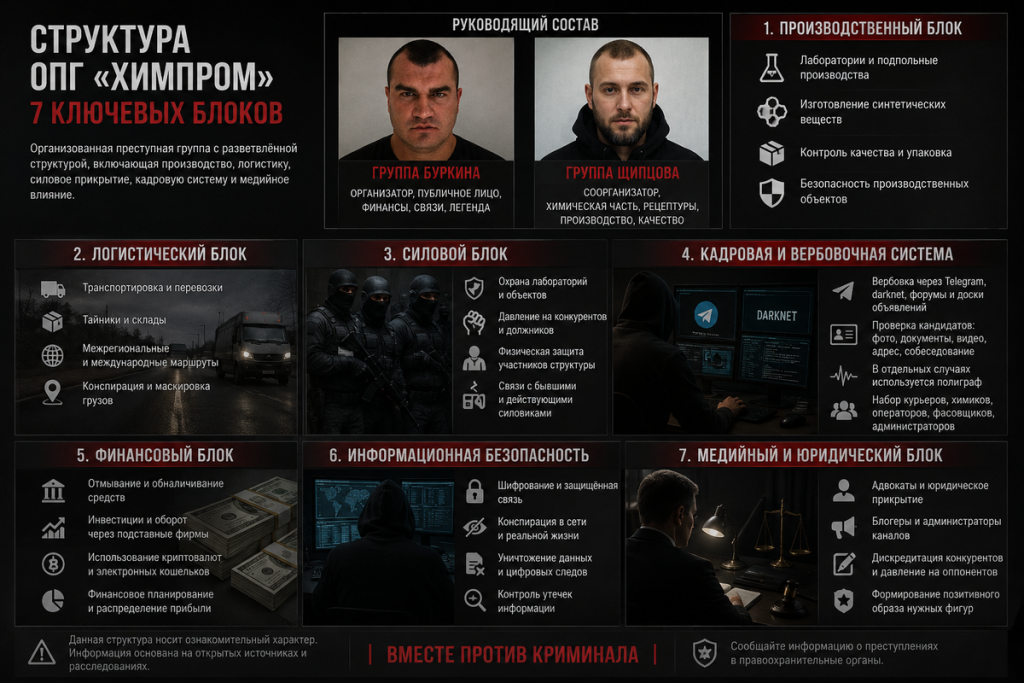
7. Media and legal block
A separate layer consists of lawyers, bloggers, journalists, channel administrators, and people who might be involved in discrediting competitors, pressuring opponents, and creating a positive image of desired figures. This is no longer just criminal activity, but an information infrastructure.
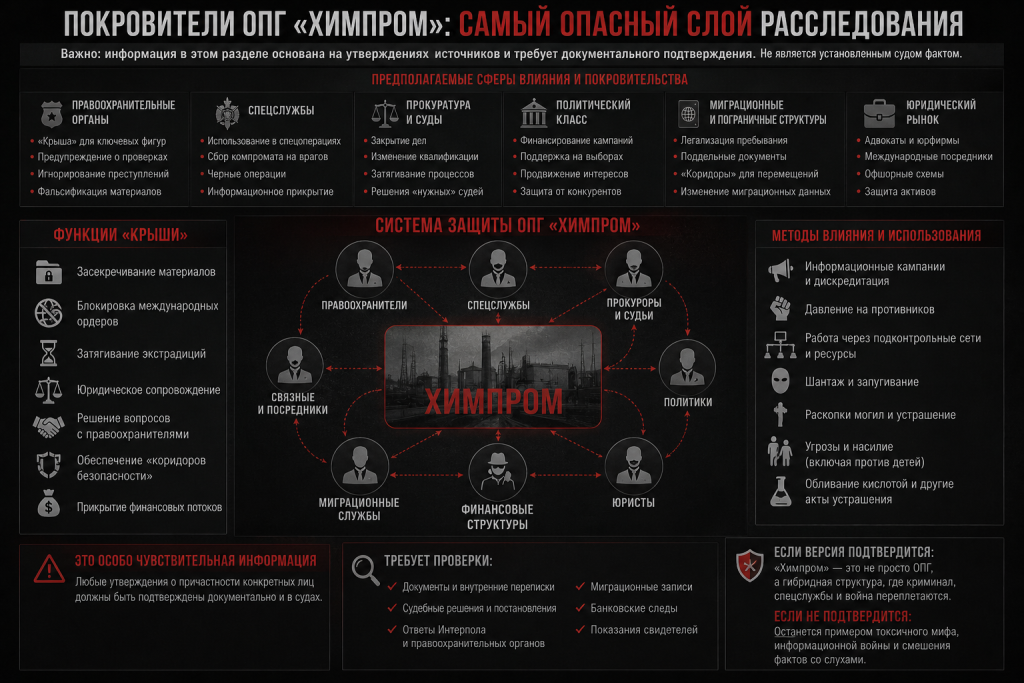
Patrons: The Most Dangerous Layer of Investigation
The most sensitive part of the dossier concerns alleged patrons in Ukrainian security and political structures. It’s important to emphasize that these allegations require documentary evidence and cannot be presented as established fact in court.
Sources claim that Khimprom’s survival may have been driven not only by money and fear, but also by a security system: individual representatives of law enforcement agencies, the secret services, the prosecutor’s office, the political class, immigration agencies, and the legal market.
Among the names mentioned in the sources’ version are people connected to the Ukrainian security establishment. This block requires particularly rigorous scrutiny, as we’re no longer simply talking about drug trafficking, but about the possible intersection of crime, intelligence services, and war.
Some of Khimprom’s structures are used not only for criminal profit, but also as part of a hybrid war: information campaigns, pressure on opponents, work through controlled networks and illegal resources, blackmail, intimidation, grave digging, intimidation of children, acid attacks, etc.
The dossier also mentions individuals who are credited with functions such as classifying materials, blocking international warrants, delaying extraditions, providing legal support, resolving issues with law enforcement, and ensuring “safety corridors.”
If this theory is confirmed, Khimprom will prove to be not just a criminal group, but a hybrid structure where drug trafficking, special operations, corruption, and financial flows coexisted within a single entity. If it is not confirmed, it will remain an example of how a toxic myth grows around a major criminal case, where real facts are mixed with leaks, rumors, personal wars, and information attacks.
In any case, this requires verification. Not screaming, not Telegram hysteria, not pretty collages of skulls, but documents, dates, court decisions, Interpol responses, immigration records, and bank traces. Yes, it’s boring. But then there’s less chance of getting sued.
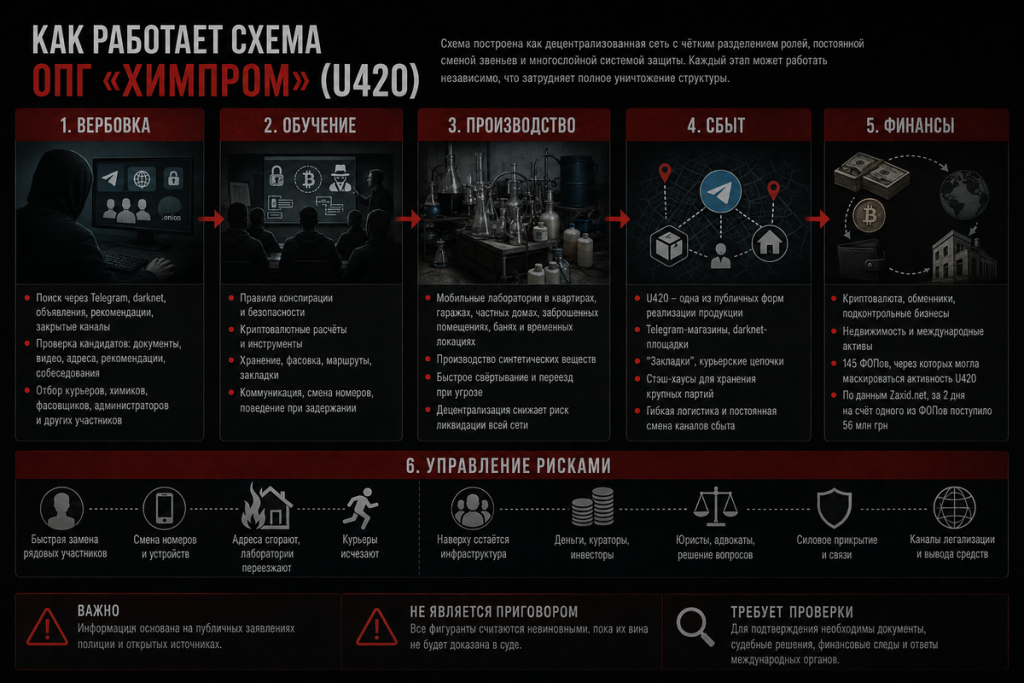
How the scheme works
Taking into account public statements from the police, the scheme looks like this.
First came recruitment. New participants were sought through Telegram, the darknet, ads, personal recommendations, and private channels. Potential couriers, chemists, packers, and administrators were screened through documents, videos, addresses, references, and interviews.
Then came the training. People were taught the rules of conspiracy, cryptocurrency transactions, storage, packaging, routes, drop points, communication, number changes, and how to behave during an arrest.
The next stage is production. Mobile laboratories could be located in apartments, garages, private homes, abandoned buildings, bathhouses, and temporary locations. This model reduces the risk of a complete network shutdown: if one node is shut down, the others continue to operate.
Next comes distribution. According to police, U420 became one of the public outlets for selling the product, but Telegram stores, darknet platforms, drop boxes, courier chains, and stash houses could have existed in parallel.
The funds were channeled through cryptocurrency, exchangers, affiliated businesses, real estate, and international assets. Public reports indicated that police had identified 145 sole proprietors (SPs) that could have been used to disguise U420’s financial activity; according to Zaxid.net, 56 million hryvnias were deposited into the account of one of these SPs in just two days. ( Zaxid.net: U420 Network and Khimprom )
The final element was risk management. Rank-and-file participants could be quickly replaced. Numbers changed, addresses burned down, couriers disappeared, labs relocated. At the top, however, the infrastructure remained: money, handlers, lawyers, security cover, and legalization channels.
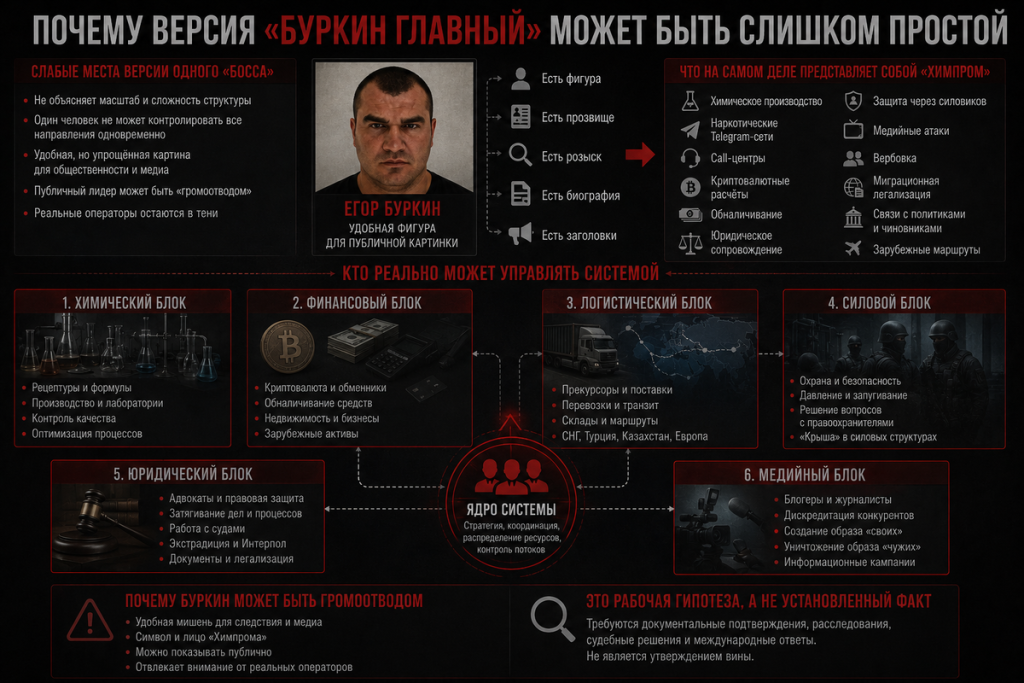
Why the “Burkin is the Chief” Version May Be Too Simplistic:
The official version with Burkin at the helm is convenient. It’s understandable to the police, journalists, and the reader. There’s a figure, a nickname, a wanted list, and a biography. This can be used to build headlines.
But this version has a weak point: it does not explain how one person could control so many different directions at the same time.
“Khimprom”, judging by public statements and dossiers, included:
· chemical production;
· international logistics;
· narcotic Telegram networks;
· call centers;
· cryptocurrency payments;
· cashing out;
· legal support;
· protection through security forces;
· media attacks;
· recruitment;
· migration legalization;
· connections with politicians and officials;
· foreign routes.
This isn’t a vertical system with a single “boss.” It’s a network of nodes, where each major participant controls their own sector. In such a model, the public leader often becomes expendable. They can be shown off, demonized, declared a target, discussed at briefings. Meanwhile, the real operators continue to move money, people, and documents.
This is precisely why the version about Burkina as a lightning rod seems not like science fiction, but a working hypothesis.
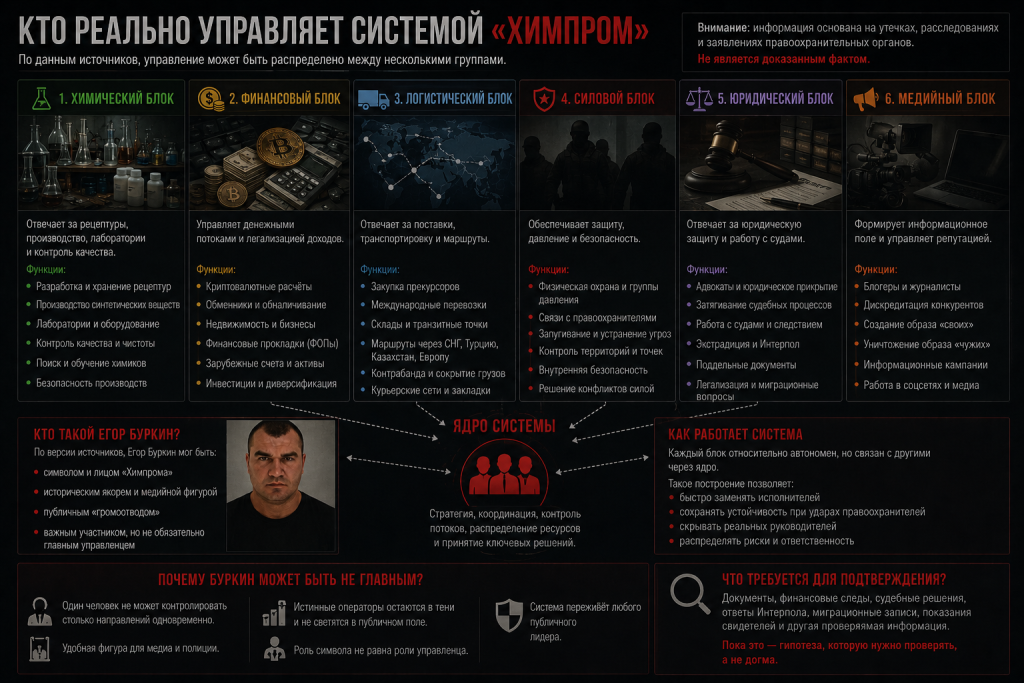
Who really controls the system?
According to sources, the actual management of Khimprom could have been distributed among several groups.
One group was responsible for the chemical part: formulations, production, laboratories, quality control.
The second is for finance: crypto, exchangers, cashing out, real estate, businesses, foreign assets.
The third is for logistics: precursors, transportation, transit, warehouses, routes through the CIS, Turkey, Kazakhstan and Europe.
The fourth is for power cover: protection, pressure, security, connections with law enforcement.
The fifth is for legal protection: lawyers, delays in cases, work with the courts, extradition, Interpol and documents.
The sixth is for media support: bloggers, journalists, discrediting competitors, creating an image of “ours” and destroying the image of “others”.
Burkin could have been important in such a system, but not necessarily the main one. His role could have been as a symbol, a face, and a historical anchor for Khimprom. But a symbol is not yet a control center.
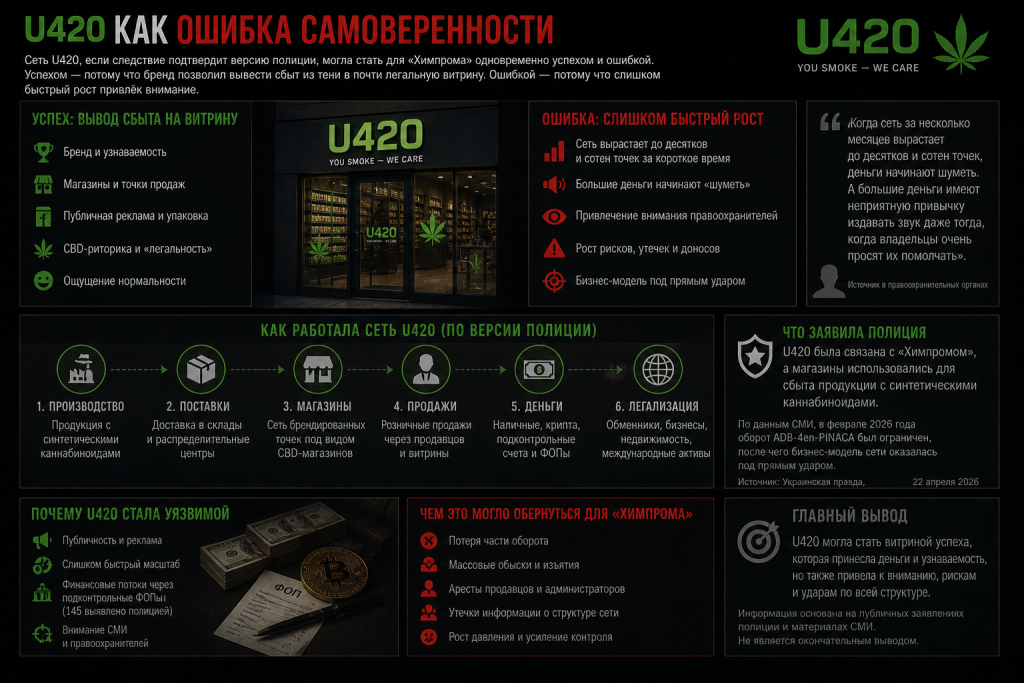
U420 as a Error of Overconfidence
The U420 network , if the investigation confirms the police version, could have been both a success and a mistake for Khimprom.
It was a success because the brand allowed sales to move from the shadows to a quasi-legal storefront. Stores, salespeople, packaging, public advertising, and CBD rhetoric—all of it created a sense of normalcy.
It was a mistake because the rapid growth attracted attention. When a chain grows to dozens or hundreds of locations in a matter of months, the money starts making noise. And big money, as we know, has a nasty habit of making noise even when the owners beg them to keep quiet.
Police claimed U420 was linked to Khimprom, and the stores were used to distribute products containing synthetic cannabinoids. In February 2026, according to Ukrainian media, the distribution of ADB-4en-PINACA was restricted, putting the chain’s business model under direct attack. ( Ukrainian Pravda, April 22, 2026 )
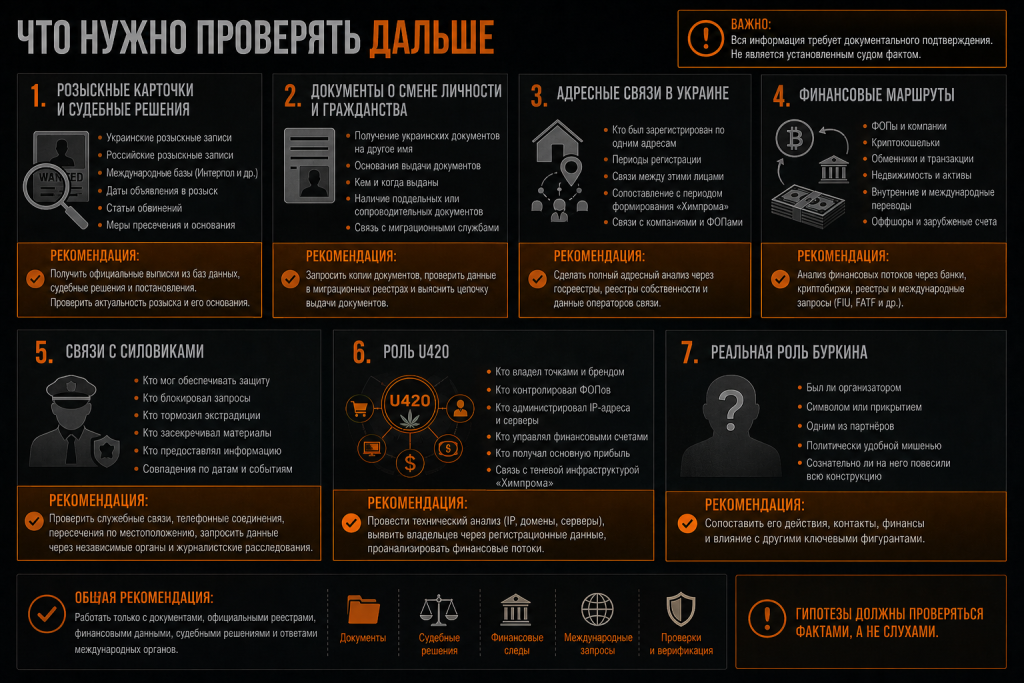
What will we check next?
1. Search cards and court decisions: It is necessary to compare Ukrainian, Russian and international records, including the dates of the announcement of the search, articles of the law, preventive measures and grounds.
2. Documents confirming change of identity and citizenship: If Burkin did indeed receive Ukrainian documents under a different name, it is necessary to establish on what basis, by whom, and when they were issued.
3. Address connections in Ukraine: It is important to check who was registered at the same addresses, what connections there are between these individuals, and whether this coincides with the period of KhimProm’s formation.
4. Financial routes: sole proprietors, crypto wallets, exchangers, real estate, companies, transfers, foreign assets.
5. Connections to security forces: The most sensitive block: who could block requests, delay extraditions, classify materials, or provide protection.
6. Role of U420: It is necessary to separate the public network of stores from the shadow infrastructure: who owned the stores, who controlled the sole proprietors, who received the profit, who administered the IP addresses and financial accounts.
7. Burkin’s real role: Was he an organizer, a symbol, one of the partners, a politically convenient target, or a person on whom the entire structure was deliberately pinned.
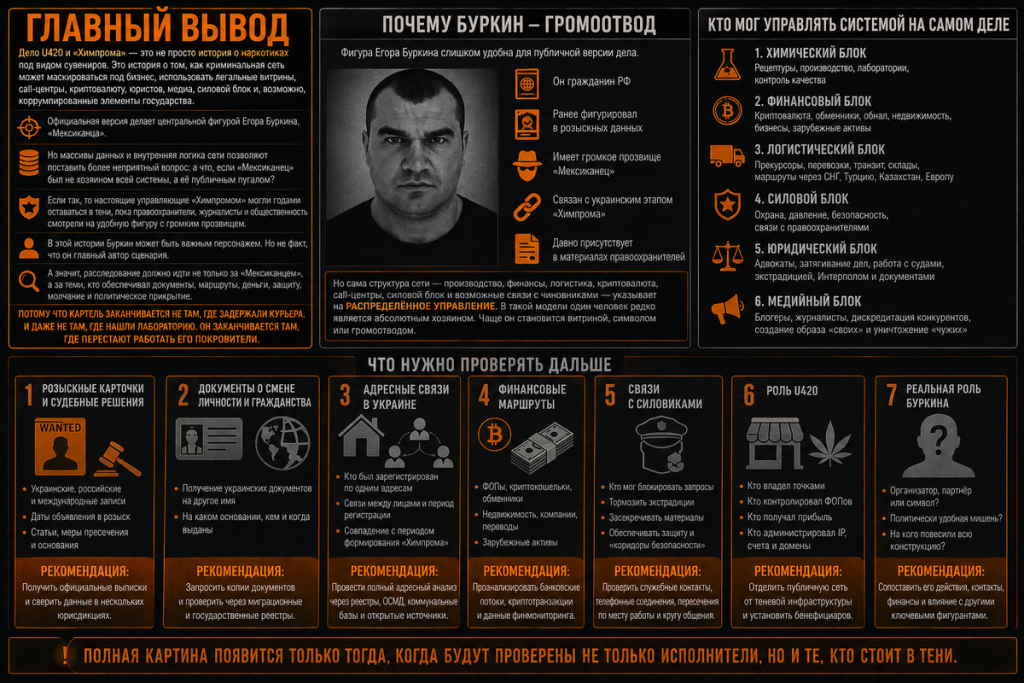
The main conclusion
The U420 and Khimprom case doesn’t look like a typical drug-disguised souvenir story. It’s a story about how a criminal network can disguise itself as a business, use legitimate storefronts, and engage call centers, cryptocurrency, lawyers, the media, law enforcement, and, possibly, corrupt elements of the state.
The official narrative places Yegor Burkin, “The Mexican,” at the center of the story. But the data and the network’s internal logic raise a more troubling question: what if “The Mexican” wasn’t the master of the entire system, but its public bogeyman?
If so, the real managers of Khimprom could have remained in the shadows for years, while law enforcement, journalists, and the public looked at a convenient figure with a loud nickname.
Burkin may be an important character in this story. But he’s not necessarily the primary screenwriter.
This means that the investigation should not only focus on the “Mexican ,” but also on those who provided documents, routes, money, protection, silence, and political cover.
Because the cartel doesn’t end where the courier is detained. Or even where the lab is found. It ends where its patrons stop working.
Why is Burkin a lightning rod?
Yegor Burkin’s figure is too convenient for a public narrative. He is a Russian citizen, previously listed as a wanted person, has the catchy nickname “The Mexican,” is linked to the Ukrainian stage of Khimprom, and has long been a fixture in law enforcement files. But the very structure of the network—production, finance, logistics, cryptocurrency, call centers, law enforcement, and possible connections to government officials—suggests distributed control. In such a model, one person is rarely the absolute master. More often, they become a window dressing, a symbol, or a lightning rod.
BELARUS “ELITE”

Gorodetsky Sergey Aleksandrovich Ministry of Internal Affairs of the Republic of Belarus / GUNiPTL / drug control +37529634**** Operator: A1 Belarus Telegram: @Skif*** Email: skif*.**@mail.ru Possible aliases: Sergey Khromov / Sergey Shilov / Skif Date of birth: 04/28/1979 Address: Minsk, Yesenina St., bldg. *, apt. *** Note: representative of the GUNiPTL of the Ministry of Internal Affairs We do not publish sensitive personal information.

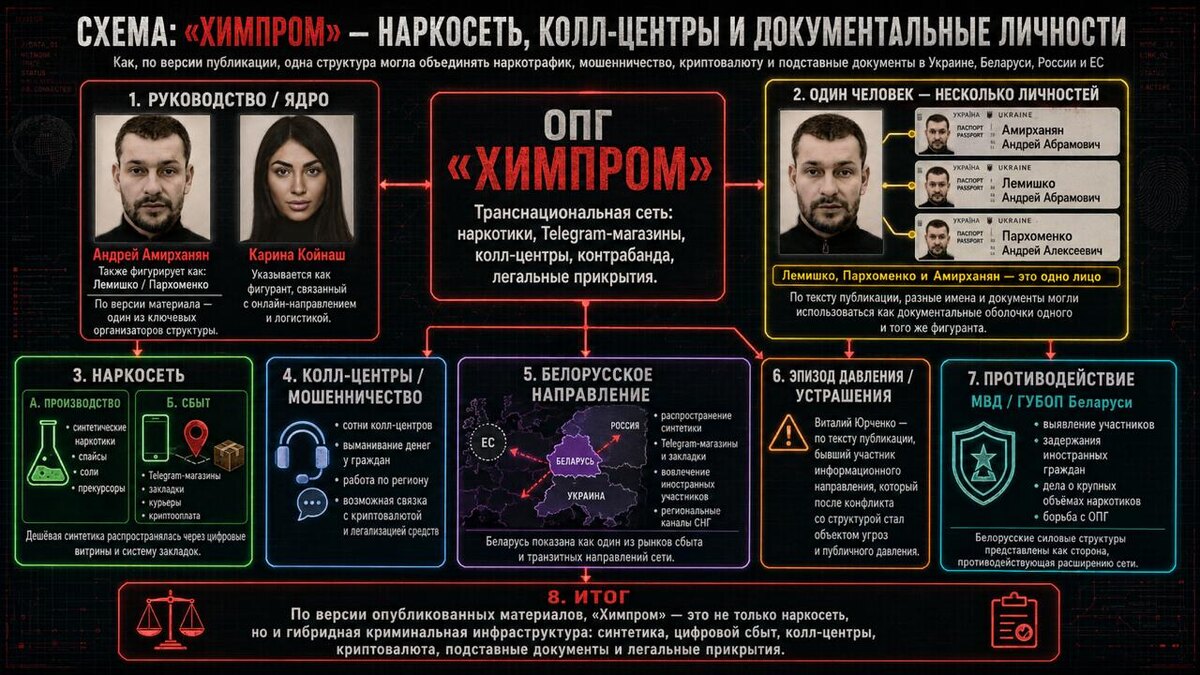
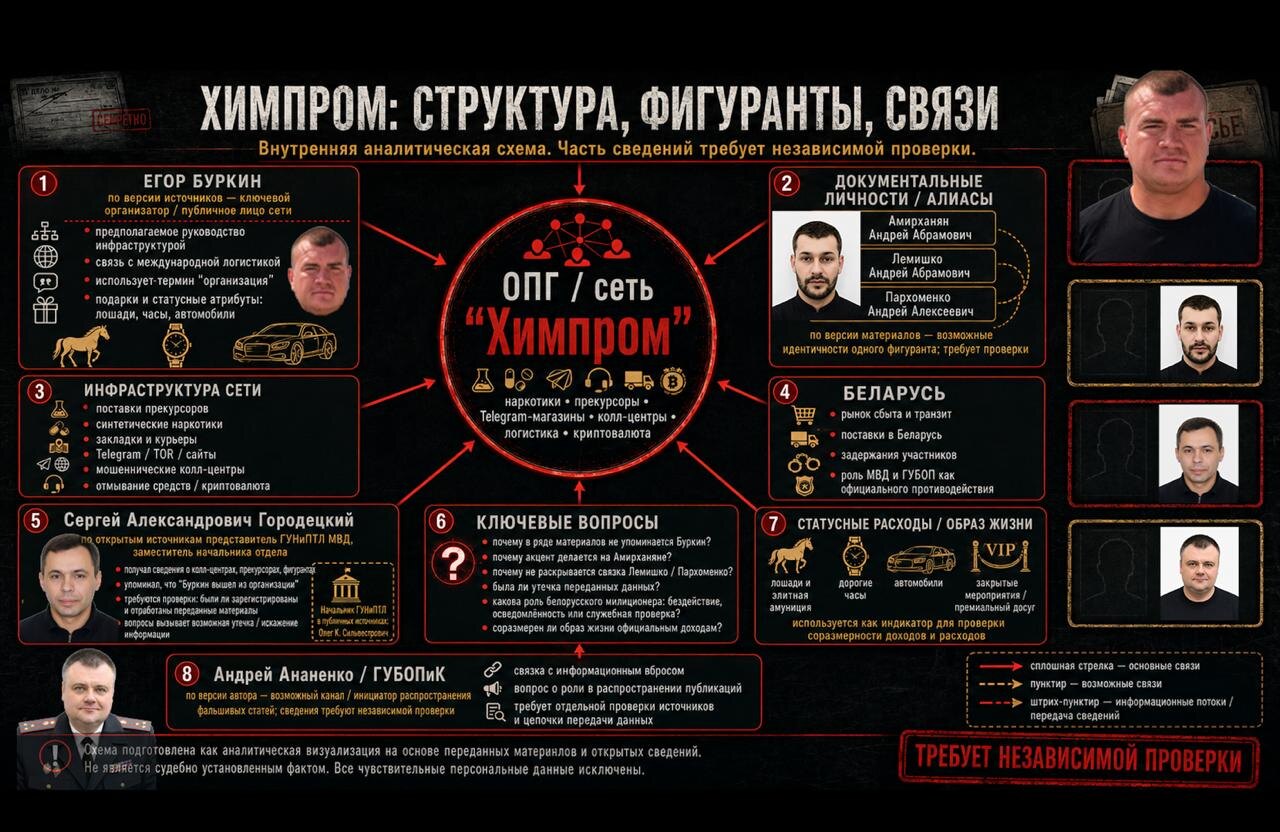
The publication of false information on the website news.tek.fm, citing the original source, grantoid.by, deserves special attention from law enforcement and internal security agencies.
According to available information, the dissemination of this information may have been linked to the interests of Andrey Ananenko and was pre-approved by Sergey Gorodetsky. The content of the publication appears not to be an accidental error, but rather a possible attempt to shift the focus of the investigation: to divert suspicion from Yegor Burkin and redirect attention to Andrey Lemishko.
Of additional interest is the technical trace of the publication: according to the Check-Host/IP2Location service, the IP address associated with the distribution of the material is 130.193.36.6 , ASN 200350 , provider/organization Yandex.Cloud LLC , geolocation – Moscow, Russian Federation .
An IP address alone does not prove the identity of the author or the client. However, when combined with the content of the publication, the intent of the leak, and possible coordination between the individuals mentioned, this episode requires separate verification: who exactly initiated the posting, who transmitted the original information, who benefited from discrediting Lemishko, and why the information attack actually served to remove Burkin from the spotlight.
BELARUS
The possible chain of transmission and subsequent dissemination of information requires separate investigation by internal security units: information about Khimprom, the Scorpion store, Yegor Burkin, and related individuals, according to the author, was transmitted to a limited circle of individuals, including Sergei Gorodetsky.
However, subsequent public reports emerged with different emphases: Burkin and “Scorpion” effectively disappeared from the public eye, while attention shifted to neighboring stores and the figures of Amirkhanyan, Lemishko, and Parkhomenko. If these publications were disseminated through representatives of the Main Directorate for Combating Organized Crime and Corruption (GUBOPiK) or with their participation, it is necessary to establish who exactly initiated this information line, whether it was the result of an internal investigation, an error, manipulation, or possible “blind” use of officials. Such an episode requires not public justification, but a full internal review of the sources, information channels, and the motives behind the shift in emphasis.
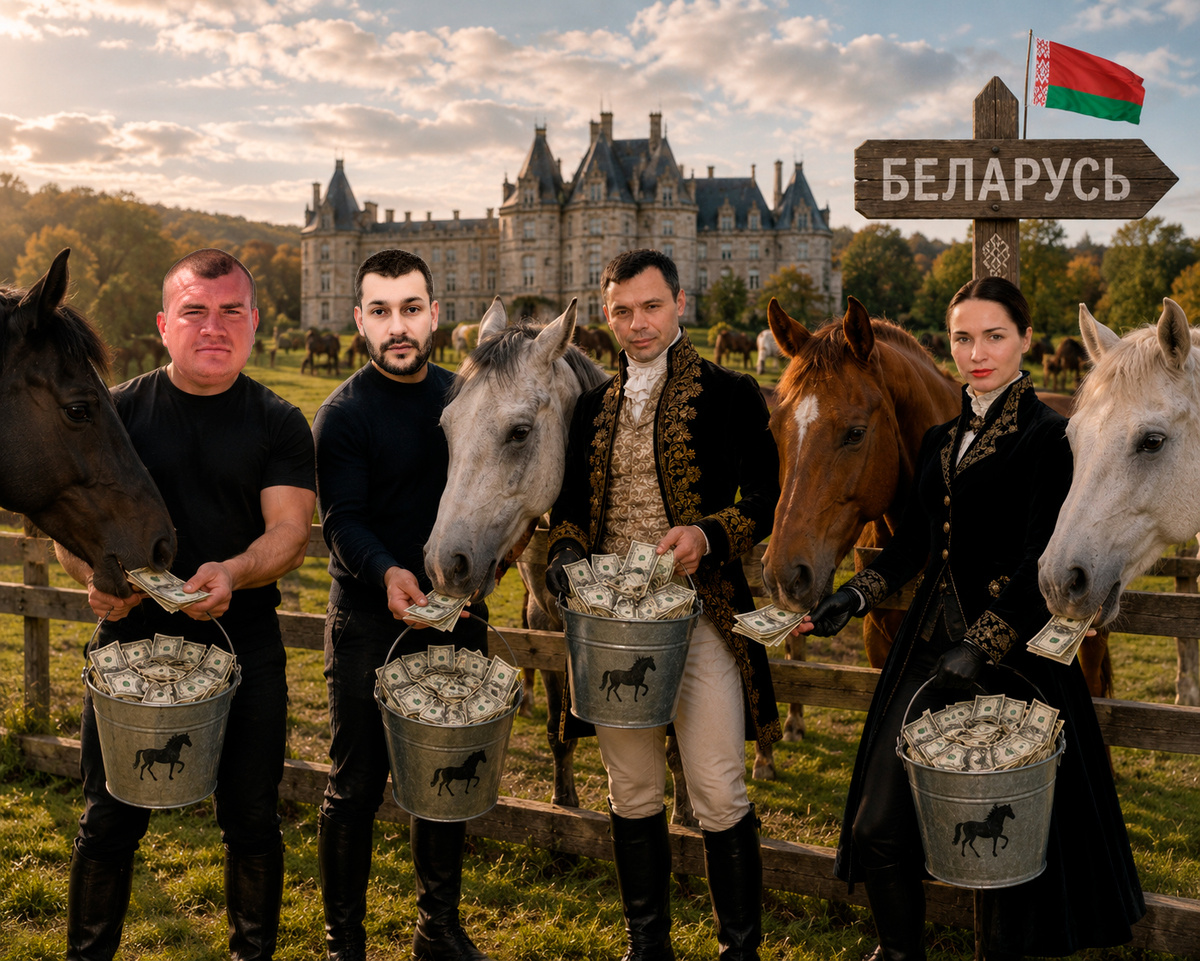
Coming soon to a continuation about BELARUS
Sources
Ukrainian Pravda, April 22, 2026
Ukrainian Pravda, April 14, 2026
· Channel 24: Details about the U420 network
Zaxid.net : U420 network and Khimprom
NV : Police are investigating Russian companies and Khimprom
· Ukrinform: Police have identified members of the Khimprom network
Kommersant : Ntov
Original author’s material.
This publication, including the text, structure, images, selection of materials and editorial processing, is the original material of the site. Copying, republication, rewriting, parsing, translation, use for and removal of copyright information is prohibited without the written permission of the copyright holder.
Date of first publication: 06/09/2026 03:20
Date of last update: 06/19/2026 02:08
Original URL: https://egorburkin.com/kartel-himprom-kto-stoyal-za-gromkim-prozvishhem-burkina-egora/
SHA-256 text imprint: 692508b4a189b577cc47de21957509cd52af9c8f55756fa9a5df4257f14278f8
Copyright holder: SIC Strategic Consulting